The Why: The Hidden Cost of Content Chaos
Feb 13, 2026
Introduction
You’ve felt it: the frustration of hunting for the “latest” version of a quest script buried in a Slack thread or the dread of realizing a designer’s tweak to an enemy’s stats broke three levels down the line.
Games are networks of meaning. A character’s backstory ties to a quest that unlocks an item, which alters gameplay and informs the narrative. Yet most studios manage this web of relationships with spreadsheets, siloed tools, and tribal knowledge. Content Management Systems (CMS) promised order, but they treat assets as isolated files rather than parts of a living ecosystem. The result? Chaos disguised as workflow.
What if the problem isn’t the content, but how we see it?
The Problem: We Design Beautiful Worlds on Top of Ugly Spreadsheets.
Games Are Growing in Complexity
Modern games are modular. Worlds are assembled from hundreds or thousands of narrative and mechanical components that constantly reference each other.
Keeping this structure manually aligned at scale is impossible.
Without visibility into dependencies, teams waste up to 20% of their time fixing what breaks instead of building what matters. That’s not development, that’s debt.
Teams Are Distributed (and Disconnected)
Today’s studios are rarely in one room. Designers, writers, programmers, and localization partners often work across different tools and time zones. The result:
Version conflicts (“Which Google Doc is the real one?”)
Overlooked updates (e.g., a dialogue change that breaks a quest trigger)
Last-minute fire drills to reconcile inconsistencies before milestones.
Change Is Constant
Iteration is at the heart of creative development. Iteration is the heartbeat of game dev. Stories evolve. Mechanics shift. Art gets refined. But every change carries risk:
What if updating a character’s name breaks a quest chain?
What if adjusting an enemy’s health invalidates balance calculations?
Without a system to track dependencies, teams fly blind, discovering problems only when players or QA do.
The Core Issue
The problem isn’t the volume of content, it’s the lack of structure to manage its relationships. We’ve mastered rendering stunning worlds, but still track their foundations in spreadsheets and sticky notes.
The cost isn’t just time. It’s creative momentum. The more energy spent on maintenance, the less remains for innovation.
Think about this: Do you know how much time your team is busy fixing what breaks when content changes? Our research shows it’s up to 40%!
The Shift: From Managing Files to Managing Relationships
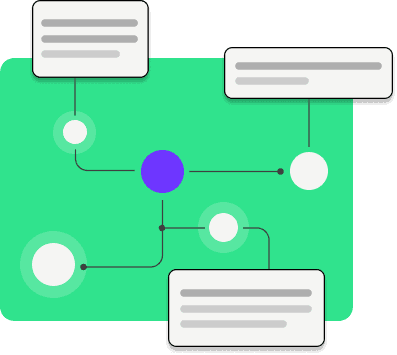
The future of game development isn’t about better spreadsheets or fancier databases. It’s about Relationship Management Systems (RMS); tools and frameworks that treat content as a network, not an inventory.
At the heart of this shift is a simple truth: Data without context is noise. A character’s health stat means nothing without knowing which quests reference it, which designers own it, or how changing it ripples through the game.
This isn’t about tools. It’s about mindset.
(Tools like Grimoire exist to make this shift possible, but the first step is recognizing the problem.)
Next in this series:
The How: Systems Thinking for Game Development